44 history of record labels and the music industry
The History Of Record Labels - HighVolMusic Many record labels are also involved in music publishing, artist management, merchandising, and other aspects of the music business. The first record label was Columbia Phonograph Company, founded in 1887. It was followed by RCA Victor and Bluebird Records. In the 1950s, independent record labels such as Sun Records and Chess Records began to gain popularity. The 1960s saw the rise of major record labels such as Motown and Atlantic Records. In the 1970s and 1980s, the music industry was ... Music Publishers vs. Record Labels. The Difference? • Music publishing is much older than the record industry • Origins date back to the 15th Century, but developed formally from 18th Century • Initially based on the sale of sheet music for several centuries • Publishers licensed piano rolls in 19th Century • Publishers felt threatened by advent of sound recording in late 19th Century
History of Record Labels and the Music Industry - Playlist Research History of Record Labels and the Music Industry by Alex Cosper Introduction 1900s 1910s 1920s 1930s 1940s 1950s 1960s 1970s 1980s 1990s 2000s The beginning of the recording industry is often thought of as Thomas Edison's patent on phonograph technology in the late 19th century.

History of record labels and the music industry
A Brief History of Recorded Music - CDROM2GO The history of recorded music, however, is much more recent. Before music was available in medium, the only way to consume it was to listen to it live. This changed in 1887 when Thomas Edison invented the phonograph. It consisted of a mechanical device using a grooved cylinder to produce music and a large horn to project it. The Independent Record Labels of the 1950's and 1960's It seems that it took a while for the more major labels to catch on to the commercial viability of rock and roll and other new types of music, and yet at the same time, independent record labels who already had a holding on this new market had found success. References . Jacobs, Pat. "Independent Record Labels of the 50's and 60's". Inside The Music Industry - Chronology - Technology And The Music ... By the late 1970s, music sales slide, and the record companies begin an industry-wide campaign to curb home taping. But cassettes hit the big time with the decline of 8-track players and the ...
History of record labels and the music industry. Top 10 major Record Labels. A record label is a brand in the music ... Owned by the Universal Music Group, the record label primarily focuses on urban and hip-hop music. Rick Rubin founded the record label in his dormitory at the New York University where he also... The History of Black-Owned Record Labels - JSTOR Daily By the 1940s and '50s, more labels began to appear on the musical landscape, due to changes in technology as well as economics. Indie labels began popping up in the North and South due to both the Great Migration and what geographer Howard Harrington III calls "the introduction of independent record pressing or manufacturing facilities during the post-war period." These allowed the small labels to break free from the major players. History - Record Industry History. The pressing plant was founded in 1958 by Casper and Wim Slinger, who were oil traders. The plant was named Artone, after their record label, manufacturing only 7" records at that time. In 1966 CBS bought a 50% share in Artone, and started a printing company that year to make their own sleeves too. The first sleeve they printed was for a Nancy Sinatra record, "Like I do". Music Timeline - InfoPlease Feb 11, 2017 · Though African, Latin American,and other genres of international music have been around for centuries, a group of small, London-based labels coin the term “world music,” which helps record sellers find rack space for the eclectic music. 1988 CDs outsell vinyl records for the first time. 1990
A Brief History Of Record Deals - Hypebot Elvis during his debut performance on the Ed Sullivan Show (1956). By the 1970s, music started maturing, legendary indies set up shop in the UK, and radio continued to help labels print money. How 'Race Records' Turned Black Music Into Big Business Not all race record labels were white-owned:Black Swan Records, for example, released about 150 race records, including recordings of black classical musicians. However, the label ran into ... Ten Books About the History of Record Labels - Dark Shift The music business has a long and controversial history. The way the music industry behaves in today's digital age often goes all the way back to the inventions of the radio and the phonograph. These ten books--listed in no particular order--are some of my favorite for figuring out how record labels have grown and evolved over the past few decades. Music Industry | Record Labels | Careers In Music | Music Gateway Music Gateway, a worldwide music industry marketplace where you find music industry jobs, music cloud storage, music news, music industry jobs, record labels companies, music business worldwide, music industry news, music industry careers, career in music business and how to start a career in music.
Phonograph record - Wikipedia A phonograph record (also known as a gramophone record, especially in British English), or simply a record, is an analog sound storage medium in the form of a flat disc with an inscribed, modulated spiral groove. The groove usually starts near the periphery and ends near the center of the disc. Cover Story: A History Of Album Artwork | uDiscover Music Published on. February 23, 2022. By. Martin Chilton. Tony Bennett said of the marvelous album covers of the 50s that, when you bought a record, "you felt like you were taking home your very own ... Liverpool - Wikipedia Liverpool has continued to be the home of numerous notable musicians and record labels—musicians from the city have released 56 No. 1 hit singles, more than any other city in the world. The city also has a long-standing reputation for producing countless actors and actresses, artists, athletes, comedians, journalists, novelists, and poets. The Music Industry in an Age of Digital Distribution | OpenMind When live music and music publishing became increasingly important industry sectors in the first years of this millennium, traditional record labels reinvented themselves, built new capabilities that allowed them to serve as record labels, music publishers, management companies, live music companies, etc.
11 Record Labels In NYC & The Type Of Music They Release ...
How the Recording Industry Works (History, Jobs, & Functions) - Soundcharts Record labels are massive stakeholders in the music industry, and in America they're represented by the Recording Industry Association of America (RIAA). With that out of the way, let's get down to business: Brief history of sound recording In the early 20th century, sheet music publishers ran the music industry.

Spotify updates Loud & Clear site including 2021 payouts stat ...
A Brief History of the Record Industry, 1890-2005 - Digital Music News The record business as most people know it, was just a short hundred-year blip in the 40,000 year history of the music business. A stopgap to solve a temporary problem that existed between the...
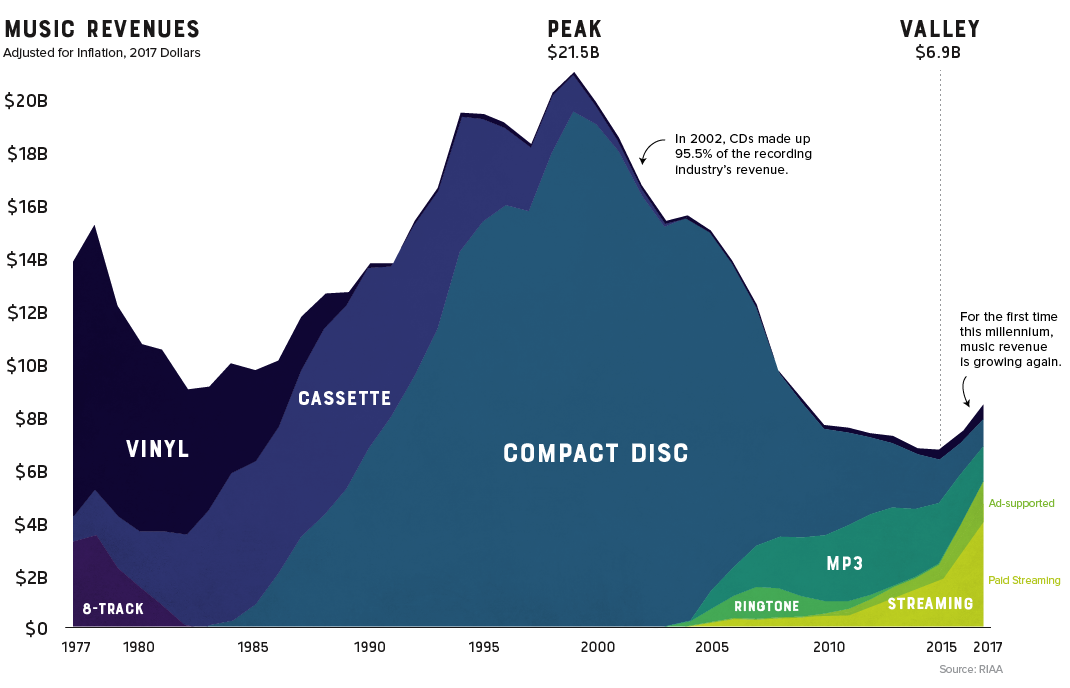
Visualizing 40 Years of Music Industry Sales
History of Vinyl Records - Complete with a Timeline and Fun Facts 1948 - Columbia Record Company introduced the first 12 inch LP 33 1 ⁄ 3 rpm microgroove record album. 1949 - RCA Victor introduced a 7 inch 45 rpm record with a hole in the center. 1950s - 1960s - Shellac 78 rpm records stopped being produced in favor of vinyl records. 1962 - The first cassette tape was invented by Phillips.

What is a Record Label? | Exploration
Guinness World Records - Wikipedia The rise of the Internet began to cut into book sales in the 2000s and forward, part of a general decline in the book industry. According to a 2017 story by Planet Money of NPR, Guinness began to realise that a lucrative new revenue source to replace falling book sales was the would-be record-holders themselves.

Major Labels: A History of Popular Music in Seven Genres ...
A History Of Record Labels - BoySetsFire Columbia Records, on the other hand, is the industry's oldest record label, dating back to 1887. It was also the company that invented the first "double faced" audio recording disc, a disc with ten grooves. Record Labels The biggest record labels in the world are Universal Music Group, Sony Music Entertainment, and Warner Music Group.

Behind the music: What do record labels actually do? You'd be ...
The Rise and Fall of Record Labels - Claremont Colleges Columbia all become major players in the recorded music industry 9. Many more record labels entered the scene in the 1950s but eventually the record labels began to merge and consolidate to form a few corporate giants. The 1960s were a decade of consolidation in the recorded music industry. Due to
Atlantic Records The Record Man: Ahmet Ertegun, Founder of ...
25 Record Labels In The UK & The Genres They Release Dec 29, 2020 · Suburban Base Records was one of the biggest breakbeat, rave, jungle and drum and bass record labels. Now defunct, they operated from 1989 to 1997 and were hugely influential. Danny Donnelly started the label as a record store specializing in dance music and released his own track called “Hypersonic”.
Press Releases - Sony Music
The history of music distribution | Features | MN2S The first machine-printed music appeared around 1473 - about 20 years after the invention of the printing press - effectively setting in motion the beginnings of a music industry that was about more than just performers, events and instruments. Composers could now create pieces intended for amateur musicians to reproduce, and popular ...

Major Labels: A History of Popular Music in Seven Genres ...
What is a Record Label? | Exploration Record labels began emerging in the late 1800s when phonographs and phonorecords began to commercialize as technology allowed mass production. By the end of the century, three record companies had established themselves as the leaders of the industry: the Thomas A. Edison Company, Victor Talking Machine Company, and Columbia Phonograph Company.

Streamers Use Playlists to Control the Music Industry | WIRED
History of Record Labels and the Music Industry - Playlist Research Dance crazes, surf music, British Invasion, Motown, folk and experimental recording broadened pop music. 1970s: Stereo 24-track recording became the new music industry standard. 1980s: Era of digital recording redefined production while CDs began replacing vinyl records. 1990s: After a series of mergers the big six record labels shrunk to four major labels.
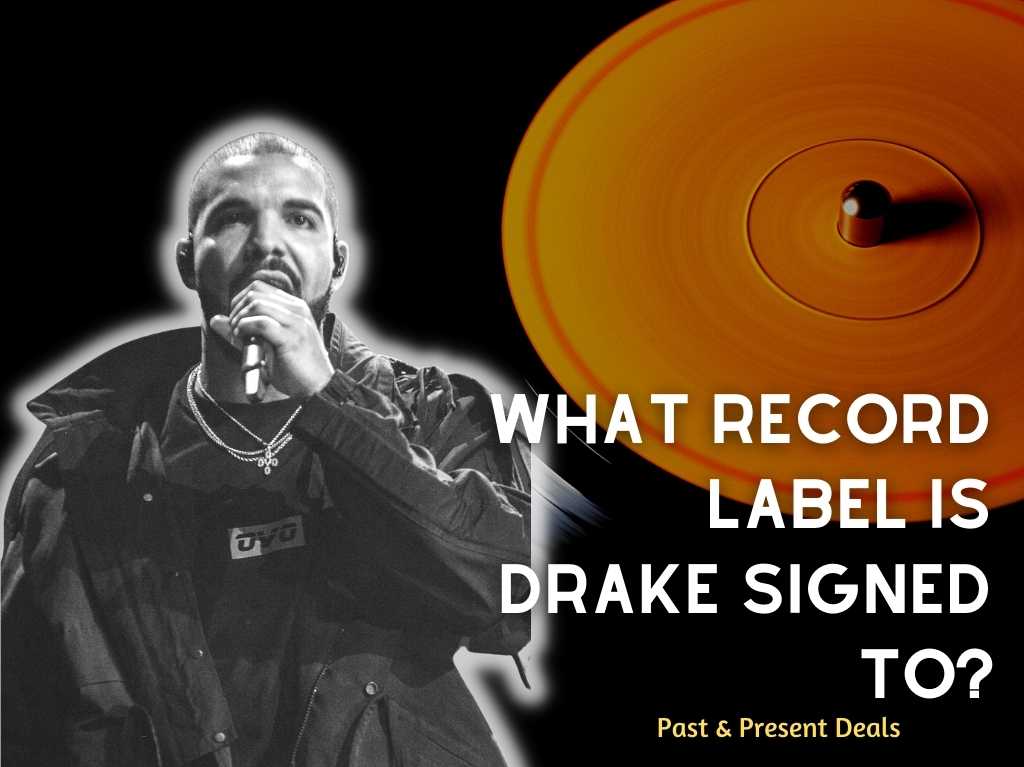
What Record Label Is Drake Signed To? (2022) Present & Past ...
The History of Record Labels By the end of the sixties, CBS was the top record label followed by Warner Brothers. RCA Victor, Capitol Records, Polygram, and MCA were also very popular and by the 70s we had new labels like EMI and Curb Records. In the 80s, we got what was referred to as the "Big Six" which includes…. Warner Music Group. EMI.
![29 Music Industry Statistics [2022]: Facts, Trends, And Sales ...](https://www.zippia.com/wp-content/uploads/2022/05/largest-record-companies-by-reveue-market-share.jpg)
29 Music Industry Statistics [2022]: Facts, Trends, And Sales ...
How the Big Four Record Labels Became the Big Three - The Balance Careers The Big Three record labels are: Sony BMG. Universal Music Group. Warner Music Group. These labels can make up almost 80% of the music market or even more—depending on the year—although it was estimated to be about two-thirds in 2016.

The History of Record Labels - Everything You Need to Know ...
HISTORY OF RECORD LABELS AND THE MUSIC INDUSTRY - Tangent Sunset History of Record Labels and the Music Industry. - Thomas Edison truly brought power to the people. He was the founder of the modern electrical world. Not only was he the founder of General Electric, which went on to become one of the biggest corporations of all time, his developments paved the way for the motion picture and music industries. Some of the many inventions that came out of his team of inventors included the light bulb, movie camera and the first audio recording device called ...
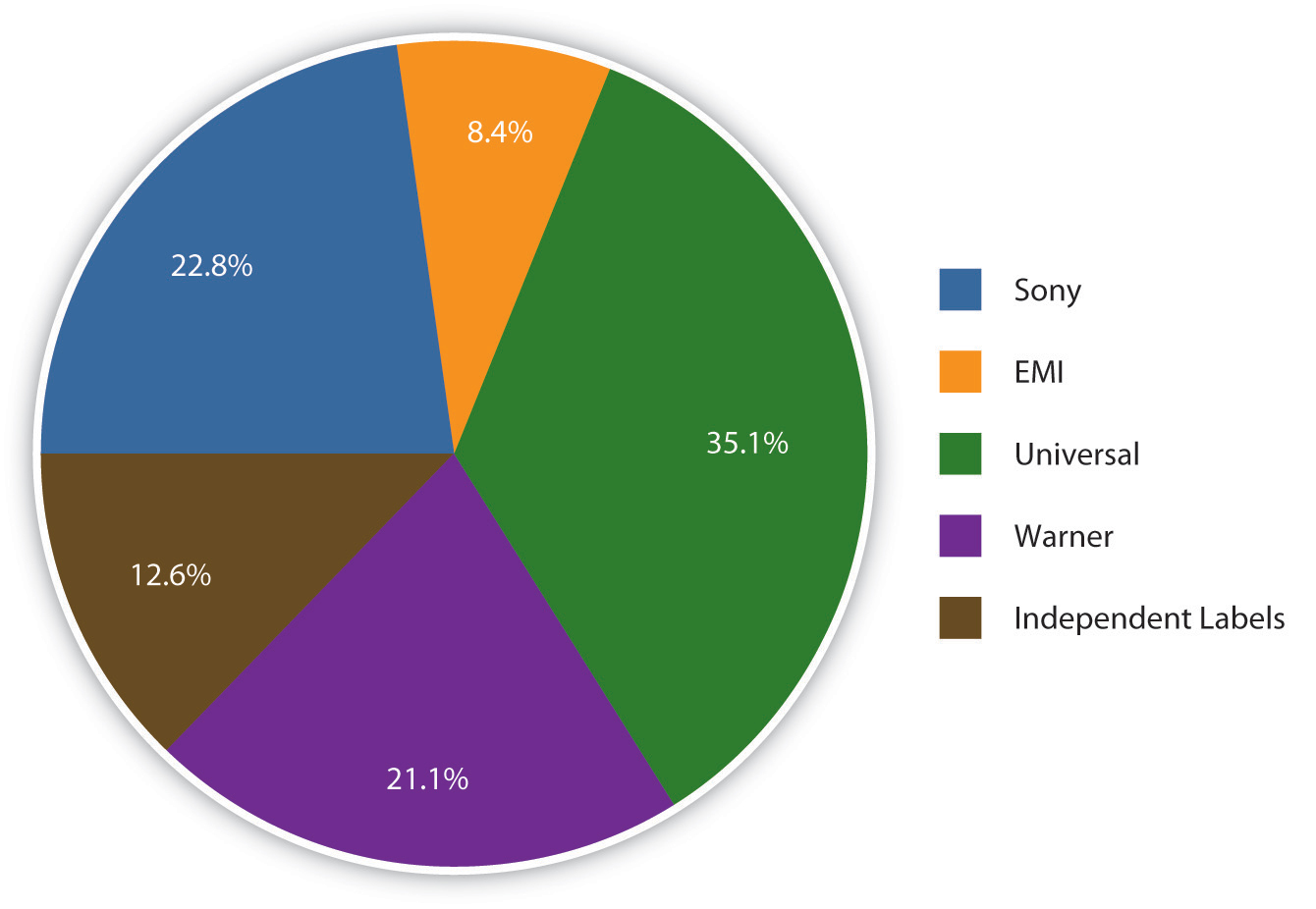
6.4 Current Popular Trends in the Music Industry ...
Music industry - Wikipedia The "record industry" eventually replaced the sheet music publishers as the music industry's largest force. A multitude of record labels came and went. Some noteworthy labels of the earlier decades include the Columbia Records , Crystalate, Decca Records , Edison Bell, The Gramophone Company , Invicta, Kalliope, Pathé , Victor Talking Machine ...
Nonesuch Records About Nonesuch Records
7 Major Record Labels & Some Of Their Notable Acts Atlantic Records is an essential label in the history of American music. Founded in 1947, they earned their cred launching jazz, R&B and soul by artists like Aretha Franklin, Ray Charles, Wilson Pickett and Otis Redding. Atlantic became a part of the Warner Music Group in 1967.
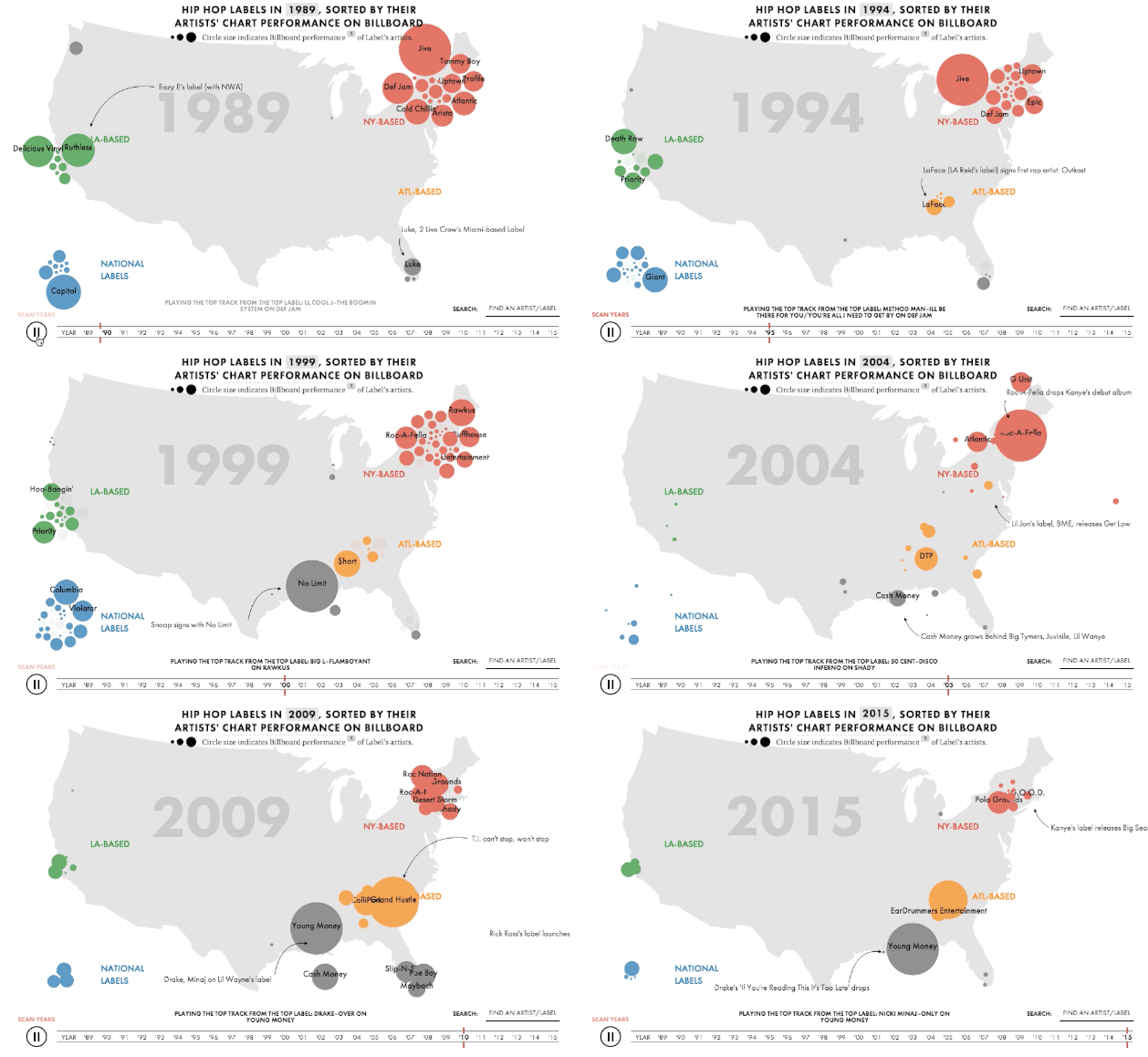
Every hip hop record label, since 1989, sorted by their ...
The Record Label's Role in the Music Industry - The Balance Careers A&M Records, founded in 1962 by Herb Alpert and Jerry Moss, stands as one of the most successful indie labels of all time, having signed artists such as Sting, Sheryl Crow, and Joe Cocker during its four-decade run. True indie labels have smaller distribution networks than their big label counterparts and typically reach consumers one at a time.

Record labels in the U.S. - Statistics & Facts | Statista
3. A brief history of the record industry | International Association ... Between 1898 and 1921 a single company, the Gramophone Co. (UK), is known to have made a total of 200,000 different recordings. The Company made recordings in most European, Asian and North African countries. The First World War naturally reduced sales, but in the 1920s records again became popular.
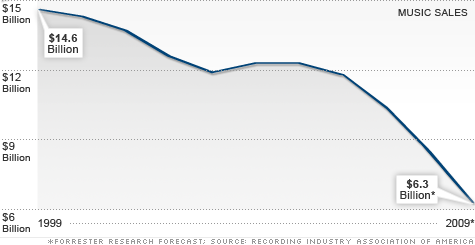
Music's lost decade: Sales cut in half in 2000s - Feb. 2, 2010
Inside The Music Industry - Chronology - Technology And The Music ... By the late 1970s, music sales slide, and the record companies begin an industry-wide campaign to curb home taping. But cassettes hit the big time with the decline of 8-track players and the ...
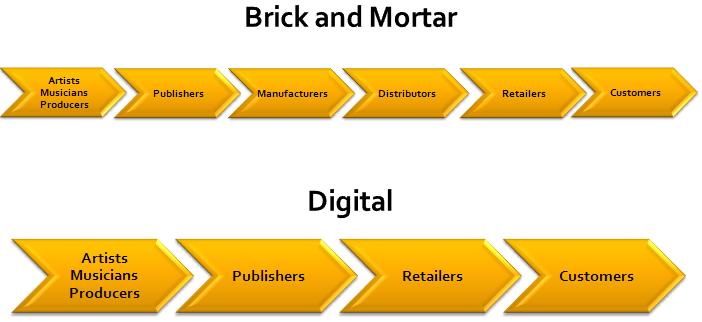
Music Recording Industry: Music Recording Industry ...
The Independent Record Labels of the 1950's and 1960's It seems that it took a while for the more major labels to catch on to the commercial viability of rock and roll and other new types of music, and yet at the same time, independent record labels who already had a holding on this new market had found success. References . Jacobs, Pat. "Independent Record Labels of the 50's and 60's".

Napster turns 20: How it changed the music industry - BBC Culture
A Brief History of Recorded Music - CDROM2GO The history of recorded music, however, is much more recent. Before music was available in medium, the only way to consume it was to listen to it live. This changed in 1887 when Thomas Edison invented the phonograph. It consisted of a mechanical device using a grooved cylinder to produce music and a large horn to project it.

Forced TikToks or meta marketing: How virality is choking the ...

The 3 Major Record Labels & Their Role in the Music Industry

The State of the Music Industry in 2020 | Toptal
/GettyImages-506525214-57ab6c353df78cf459aba2ac.jpg)
How the Big Four Record Labels Became the Big Three
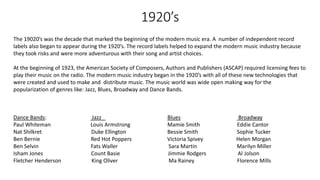
History of music video

Record label - Wikipedia
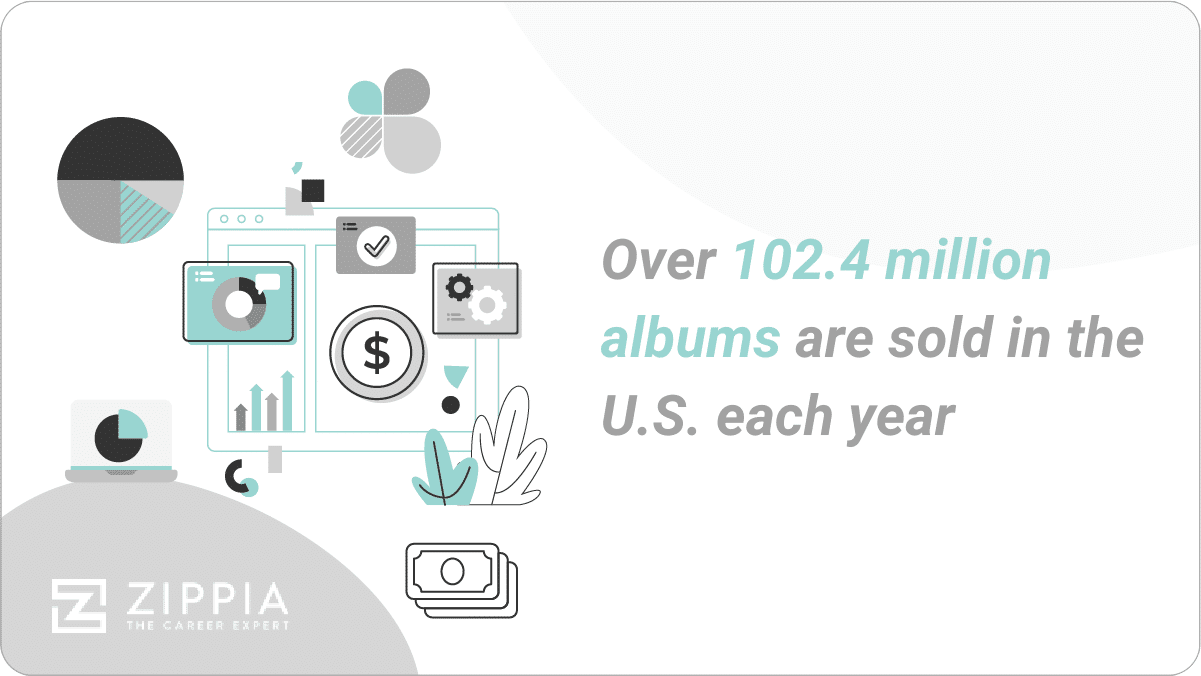
The 10 Largest Record Labels In The United States – Zippia
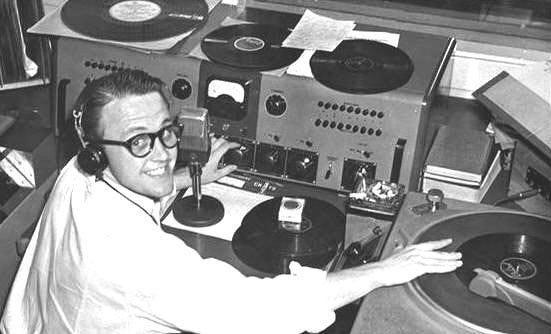
History of the Record Industry, 1920— 1950s | by A Voice ...

AWAL | Decoded: The History of Record Deals
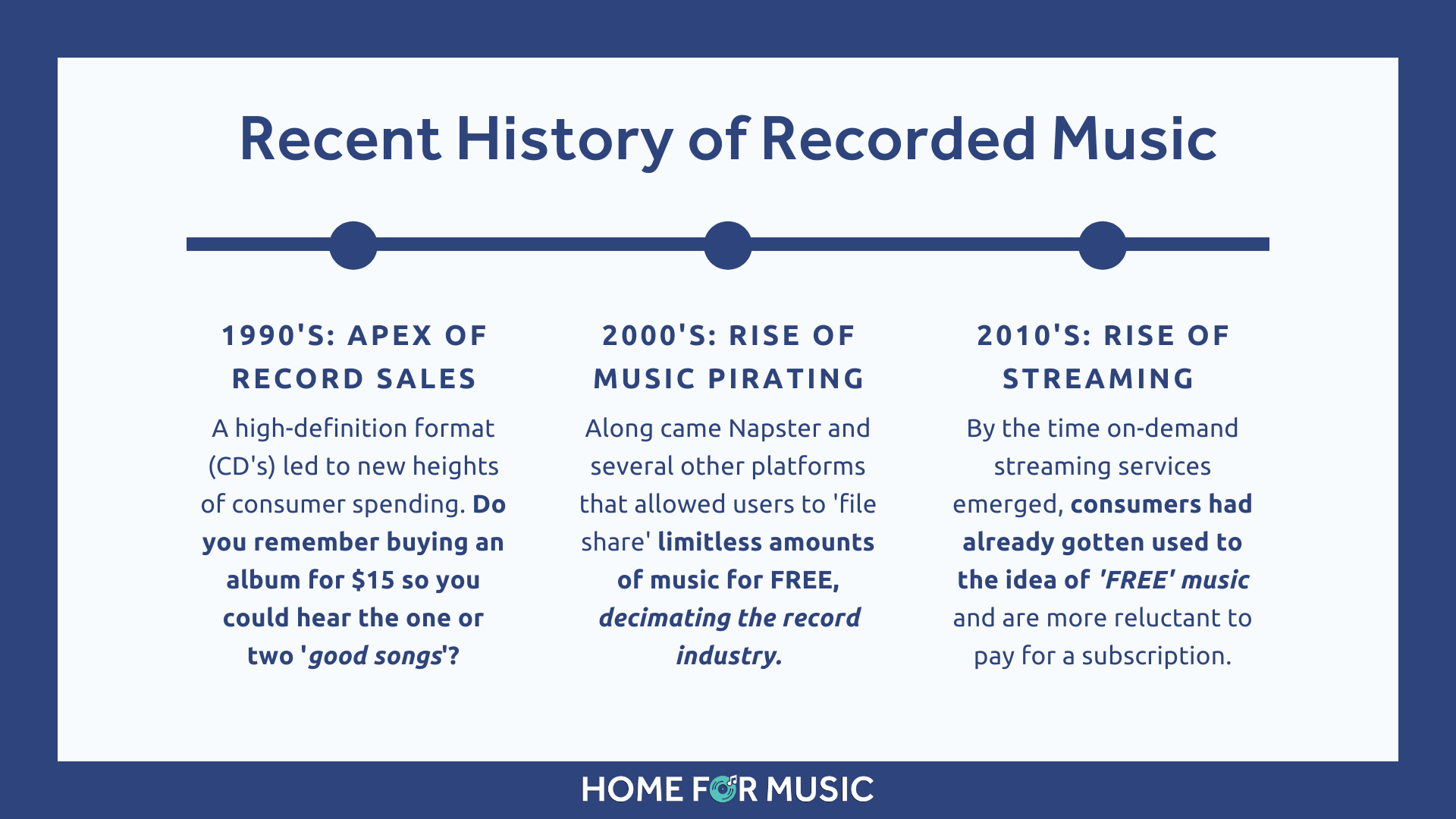
Evolving Artist Development in the Music Industry — HOME ...

History of Columbia records. One of the first record ...
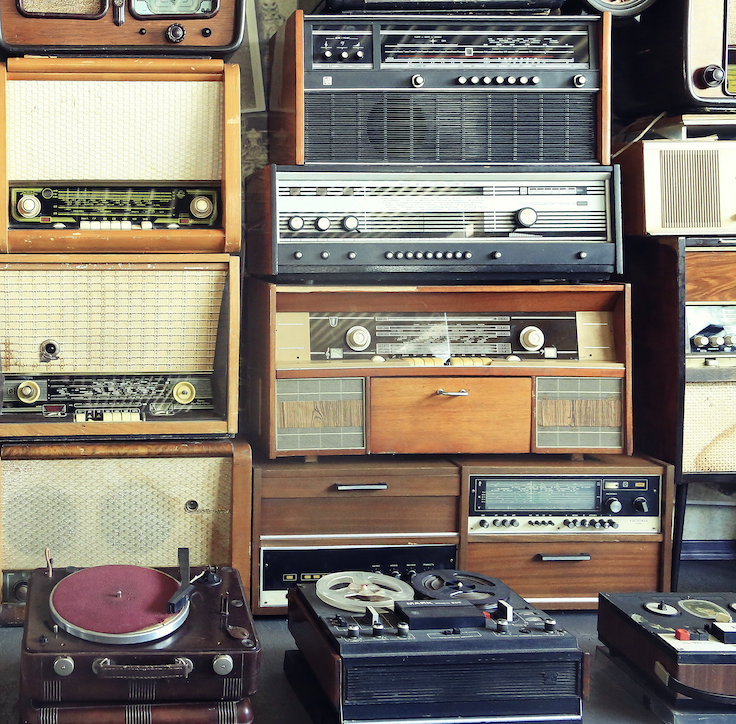
The History of Record Labels - Everything You Need to Know ...
The 360 deal and the 'new' music industry
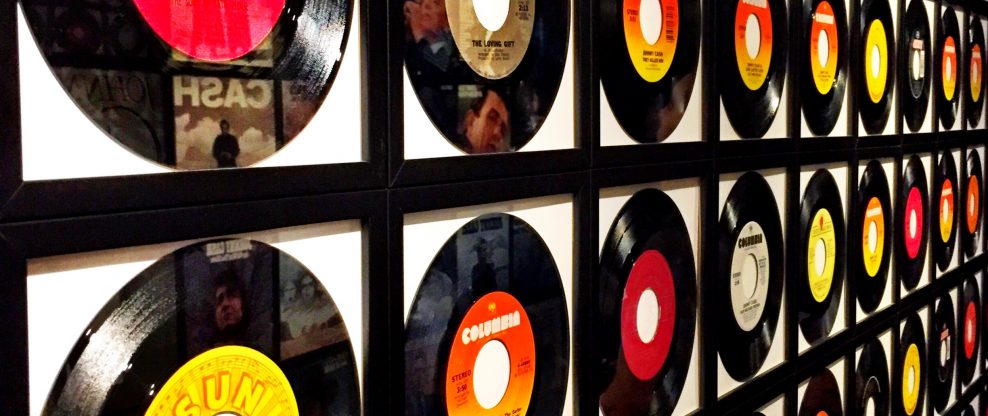
The Evolution Of The Record Label - CelebrityAccess
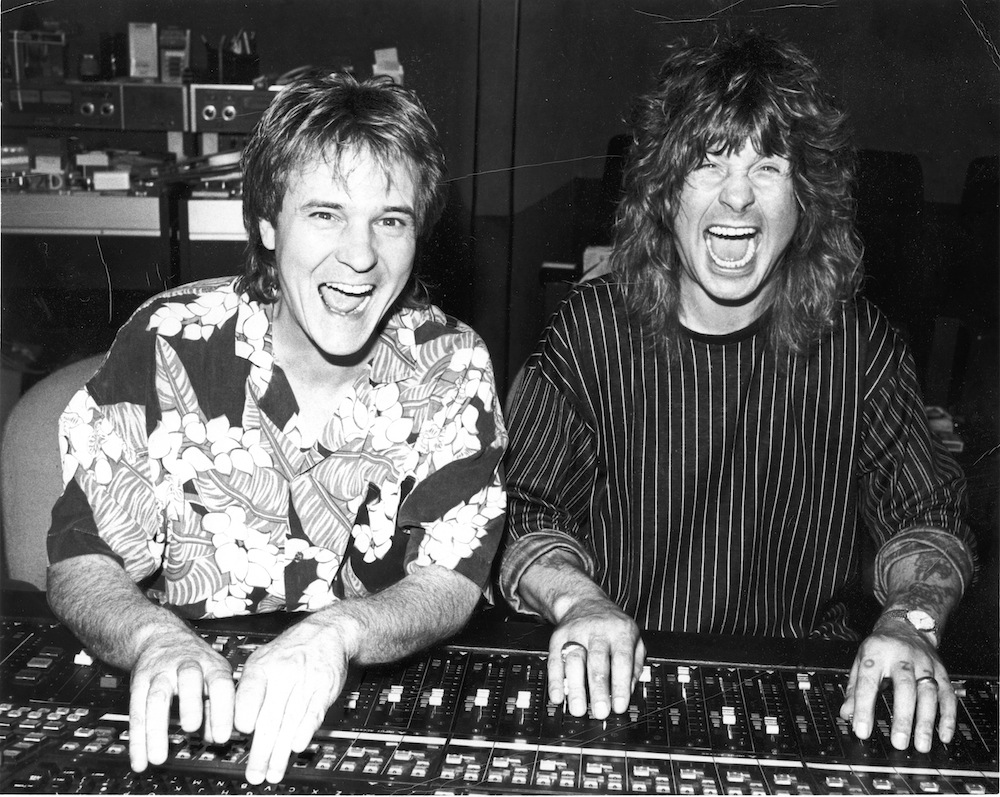
When L.A.'s Recording Studios Ruled the Music Scene | Essay ...
Music Labels | Record Labels | Indie Labels | Мusic Gateway

How Record Labels Screw Artists – Eleven B Studios
The History and Science Behind Vinyl Records | COMSOL Blog

AWAL | Decoded: The History of Record Deals
Industry Data - IFPI

Over 1,000 artists are now making more than $1 million from ...

A2 Media: The History of the Music Industry

Record label CEO explains how music NFTs are set to ...
This was Sony Music's contract with Spotify | The Verge
Post a Comment for "44 history of record labels and the music industry"